


Episode Show Notes
Pat Ehlers has been fly fishing since he was a kid exploring trout streams in Wisconsin’s Upper Peninsula. Over the years, his curiosity expanded far beyond trout, leading him to become one of the leading voices in warmwater fly fishing and innovative fly design.
We dug into bass behavior, fly line selection, fly tying materials, electronics, and how lessons from conventional bass fishing continue to improve fly fishing techniques.
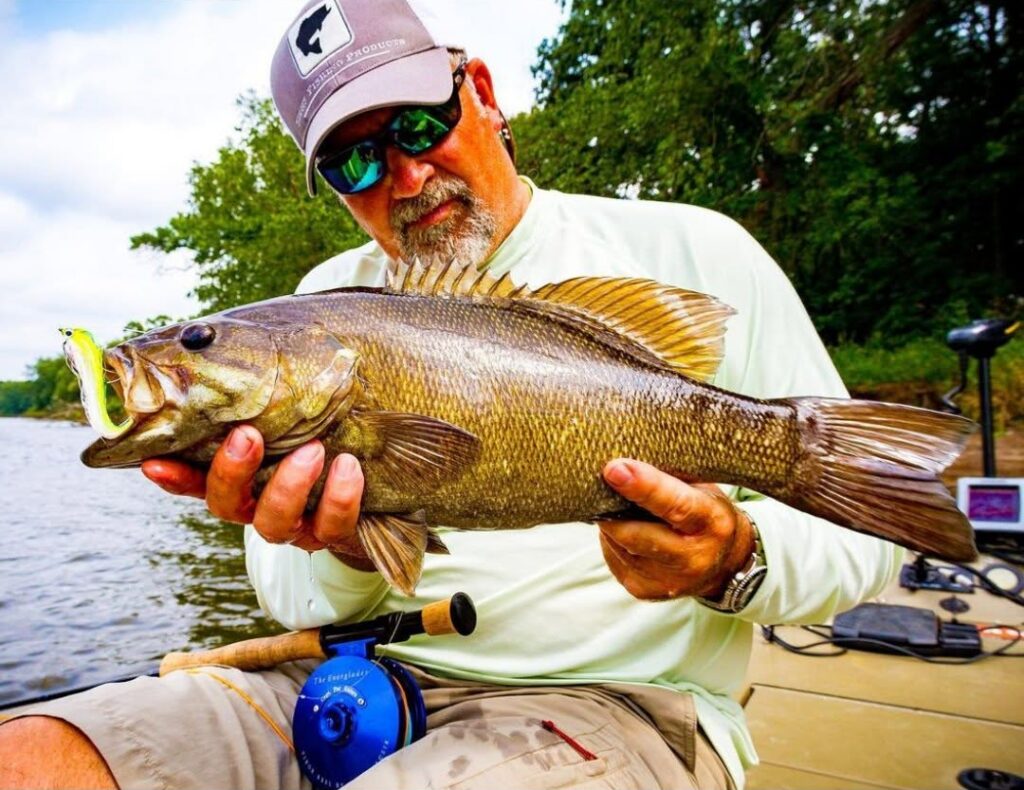
Show Notes with Pat Ehlers on The Fly Fishers
About Pat Ehlers
Pat Ehlers is the longtime owner of The Fly Fishers in Milwaukee, Wisconsin. During nearly four decades in the fly fishing industry, he has become known as an innovative fly designer, guide, educator, and ambassador for warmwater fly fishing.
He’s worked closely with Scientific Anglers on fly line development, designed rods and flies, and continues to experiment with new materials and techniques that bridge conventional and fly fishing.
From Trout Streams to Wisconsin’s Warmwater Fisheries
Like many anglers, Pat started chasing trout before discovering the incredible warmwater opportunities closer to home. Growing up near Milwaukee meant bass, bluegill, pike, and musky were always within easy reach, and that shaped the direction of his fishing.
Wisconsin offers an impressive variety of fisheries within a few hours, including:
- Smallmouth rivers
- Largemouth lakes
- Lake Michigan salmon and trout
- Driftless trout streams
- Northern Wisconsin lakes
- Mississippi River backwaters
One point Pat emphasized is how much public access Wisconsin offers for anglers willing to explore.
Why Largemouth Bass Deserve More Attention
While smallmouth have become the fly angler’s favorite bass species, Pat believes largemouth are still one of the most overlooked gamefish on a fly rod.
Instead of limiting bass fishing to topwater poppers, he recommends thinking about where fish position themselves throughout the year. During summer, bass often hold deeper around weed edges, making sinking lines and subsurface presentations much more effective.
Key takeaways:
- Fish weed edges instead of trying to penetrate heavy vegetation.
- Don’t rely exclusively on floating lines.
- Match retrieves to fish activity.
- Think horizontally instead of vertically when fly fishing.

Using Sinking Lines Like Conventional Lures
One of the biggest themes throughout the episode was translating successful gear fishing techniques into fly fishing.
Pat explains that many productive conventional presentations can be recreated with fly tackle by choosing the right line rather than simply changing flies.
Some of his favorite Scientific Anglers setups include:
- Scientific Anglers Sonar Mini Tip
- Scientific Anglers Sonar Sink Tip
- Scientific Anglers Sonar I/3/5
- Scientific Anglers Sonar I/5/7
He also recommends shortening leaders dramatically when fishing full sinking lines.
Typical setup:
- 3 to 4 feet of 15-16 lb leader material
- Larger buoyant streamers
- Dahlberg Diver fished subsurface
Rather than fishing the Dahlberg Diver strictly as a surface fly, Pat fishes it underwater like a crankbait by pairing it with sinking lines.
Designing Better Bass Flies with Modern Materials
Pat has spent years designing flies for Rainy’s Flies, constantly experimenting with synthetic materials and adapting successful bass lures into fly patterns.
Some of the flies discussed include:
He explained how modern materials allow flies to become more durable while producing better movement underwater.
One lesson that stood out involved crayfish research conducted by biologists. Pat learned that bass consistently preferred smaller crayfish around 1½ to 2 inches long over much larger prey. That experience continues to influence his fly designs today.
Retrieval Speed, Hang Time, and Bass Behavior
Another major takeaway was slowing down. Pat believes many fly anglers retrieve streamers much too quickly, especially as water temperatures cool. He recommends experimenting with:
- Long pauses
- Short strips
- Fast two-handed retrieves
- Intermediate lines for longer hang time
Changing retrieve speed often matters more than changing flies.
How Electronics Improve Fly Fishing
Although electronics dominate tournament bass fishing, Pat uses them differently. Instead of chasing individual fish with forward-facing sonar, he prefers using electronics to locate productive structure before making casts with the fly rod. His favorite tools include:
- Side Imaging
- Down Imaging
- 360 Imaging
- Forward Facing Sonar
The biggest benefit is efficiency. Rather than spending hours searching unfamiliar lakes, electronics help identify weed edges, rock piles, baitfish, and structure where bass naturally hold.
Running a Fly Shop for Nearly Four Decades
Pat opened The Fly Fishers nearly 38 years ago after someone told him he’d never make it in the fly shop business. That challenge became motivation.
Over the years, the business has continued to grow by focusing on knowledgeable staff, adapting to industry changes, embracing e-commerce, and making customer service the highest priority. One thing hasn’t changed: Everyone working in the shop still fishes.
You can find Pat at theflyfishers.com.
Reach their shop at 1-414-791-8100.