


Episode Show Notes
When you spend enough time around steelhead guides, you start to notice something: the truly fishy ones never stop learning. That’s exactly the vibe I get every time I’m on the river with Pat Beahen. The guy reads water like it’s printed in large font, and he’s got this river-smart intensity that makes you believe a fish could grab at any second.
This episode pulls together decades of Pat’s life chasing steelhead across BC — from Whistler beginnings to long seasons on the Bulkley and the Dean. If you’re a Great Lakes angler looking to level up your swung-fly game, this one’s packed with insight.
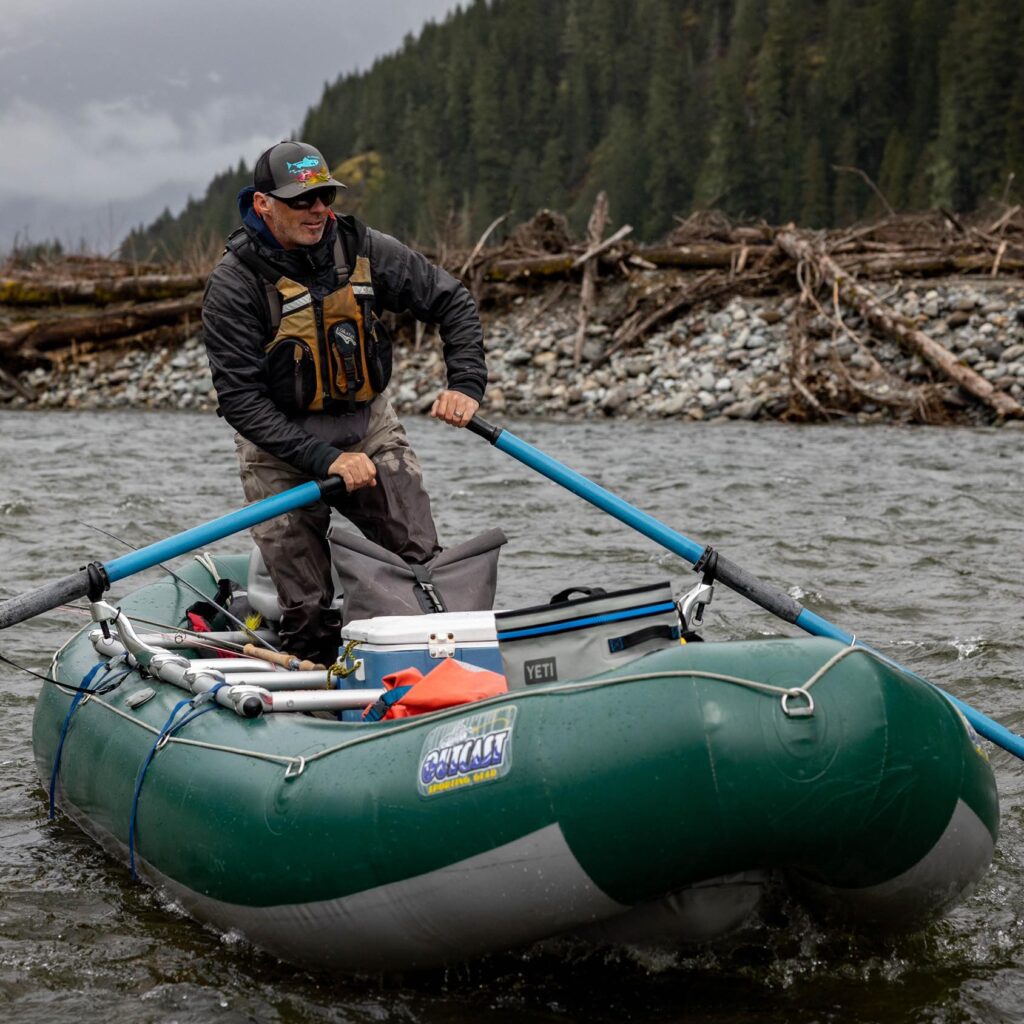
Show Notes with Pat Beahen on Steelhead Swing Tips
Pat’s Path to British Columbia Steelhead
Pat grew up along the St. Lawrence, fishing warmwater species before stumbling into fly fishing at a shop called Fishing Buddies. Steelhead didn’t click for him until he started watching old Lani Waller tapes on repeat.
He eventually landed in Whistler chasing snow — not steelhead — but that changed fast when he met Brian Niska, who pulled him into guiding and spey casting traditions handed down from the Mike Maxwell era.
From Whistler to the Bulkley River Lodge
Pat’s first lodge gig came in 2008 after a birthday phone call from Whitey at Bulkley River Lodge. Before that, he spent years bouncing between Whistler guiding and month-long BC steelhead road trips.
He talks about that tight-knit era — the friendly competition, the early-days learning curve, and the shared obsession with steelhead among anglers like April Vokey and others.
Pat’s Year: Bulkley, Dean, and Whistler Winters
Most of Pat’s year is spoken for with two major lodge seasons plus a March–April stretch on his home rivers around Squamish. When he’s off the water, he’s splitting wood, looking for shed antlers, and hanging with his cat and wife.
But guiding months are long days — dark to dark — and he emphasizes how little downtime a BC guide actually gets.
Building a Beginner-to-Pro Steelhead Setup
Pat simplifies gear choices better than anyone. If you’re new to Great Lakes steelhead swing fishing, pay close attention here.
He likes:
- 7 wt Spey rod, 12.5–13 ft
- 20–22 ft Skagit head for most anglers
- Shorter sink tips for ease and consistency
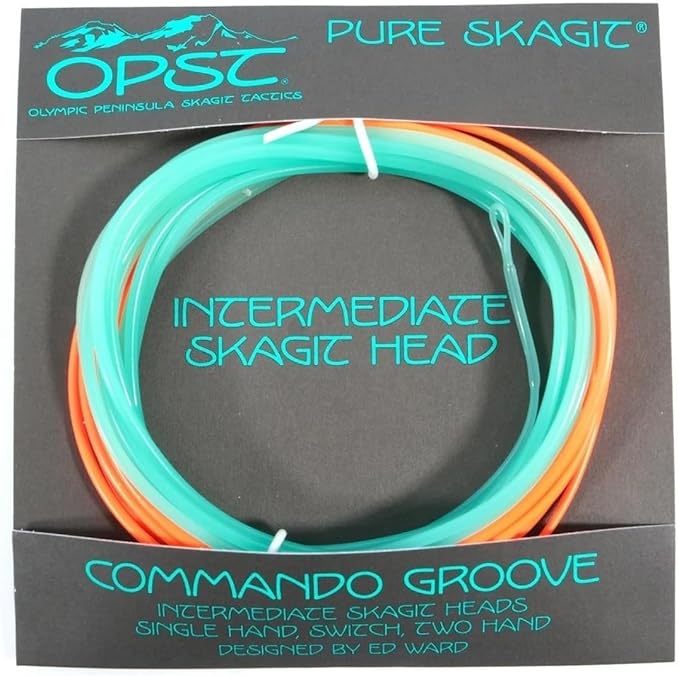
He notes that a shorter rod pairs naturally with today’s shorter heads, and the goal is simply to make casting and setup easy enough so a visiting angler fishes effectively right away.
How Pat Teaches: Flow, Speed, and Steelhead Mindset
Pat’s success guiding comes from two things:
- High engagement — he watches everything.
- Letting anglers “flow” when they’re dialed.
When a client is swinging well, he gives them space. When something’s off, he steps in immediately. It’s a balance he learned during his Whistler days guiding one-off day trips — where you had just a few hours to teach, adjust, and find a fish.
Takeaways:
- Always be ready.
- Always have a plan for what happens if a big fish eats near logs or fast water.
- The swing should feel good — trust that feeling.
The Dean River: Fish That Fly Out of the Water
Pat breaks down the unique geography of the Dean River, where fish hit gradient immediately after entering from the ocean. That produces some of the most aggressive steelhead on earth.
We talk about the famous “pogo” steelhead — fish that rocket 3–4 ft out of the water for no obvious reason. Pat’s theory: they see large underwater boulders before fully acclimating to river life and launch upward in a predator-escape response.
Gradient, Holding Water, and How Fish Actually Move
Pat considers gradient the #1 factor determining where migrating fish briefly stop — and therefore where we can catch them. He explains how subtle changes in river slope can reveal the “elevator” zones steelhead slide into during their push upstream.
Quick gradient rules:
- Look upstream to read the river better.
- Big-fish lies often coincide with bigger substrate.
- Smaller fish can tuck behind volleyball-sized rocks.
This section is gold for Great Lakes steelhead anglers, especially those on gradient-heavy rivers like the Cattaraugus, the PM, or Ontario tribs.

High, Low, and Clear Water: Adjusting Without Overthinking
High water:
- Aim for 16″ of visibility or more
- Choose flat water where the fly stays visible longer
- Use flash, wiggle, and slightly larger profiles
- Intruder-style flies
Low water:
- Pat loves it — better visibility, better dry-fly opportunities
- Spotting fish changes everything
- Lighten up tips and flies
Sunny days:
- Light angle matters more than shade
- Sun straight into their eyes can reduce response
- Cloudy days are generally more consistent
Swing Speed, Mending, and Reading Complex Water
This is one of the best tutorials on swung-fly control we’ve ever had on the podcast.
Pat’s core elements:
- Cast tight and clean
- Lift and pull the head to angle the tip upstream
- Dead-drift to penetrate the surface current
- Hold 1–3 seconds
- Steer the belly to maintain ideal fly speed
- Mend only when needed — avoid robotic patterns
Confused hydraulics?
- Small rod lift
- Subtle downstream mend
- Keep the fly on its “set” track
Dry-Fly Steelhead: Aggression, Competition, and Speed
On certain Skeena tributaries — especially the Bulkley — Pat fishes dries fast and confidently. Fish there grew up competing hard for limited insect life, making them more willing to smash surface flies.
His dry-fly approach:
- Gain tension immediately
- In even currents: no mend
- In mixed currents: small mend, then speed up mid-swing
- Move with your feet to find the biter
- Slow down only after you get feedback
Flies Mentioned:
- Bombers
- Wakes
- Skaters
[PRODUCT LINK: Steelhead skating flies]
Story Time: The Retching Guide and the Rotten Chinook
Pat closes with a classic Whistler-era story involving sockeye, rainbow trout, a timid wader, a rotten Chinook at his feet, and Pat’s legendary sensitivity to smells. If you know him, you know: when Pat starts retching, everyone else starts laughing.